



News Summary
Moody’s Ratings has affirmed MGM Resorts International’s B1 corporate family rating, concluding that the credit risk associated with the approximately $10 billion Osaka IR development is offset by the group’s roughly $2.4 billion in cash and more than $4.9 billion in revolving credit capacity.
In a mid-November 2026 credit update, Moody’s Ratings affirmed MGM Resorts International’s corporate family rating (CFR) at B1 and MGM China’s senior unsecured notes at B1, maintaining a stable outlook for both. According to reporting by IAG, Moody’s incorporated the group’s commitment to the approximately $10 billion Osaka IR development into its analysis and concluded that the risk is offset by the group’s combined liquidity — including roughly $2.4 billion in cash (encompassing MGM China) and more than $4.9 billion in revolving credit capacity. Debt/EBITDA for the trailing twelve months through September 2026 stands at 6.8x; Moody’s projects a gradual decline, supported by growth in the digital business and a reduction in lease obligations through the sale of regional properties. MGM has disclosed that it plans to increase its annual investment in Osaka to approximately $1 billion in 2027 and 2028.
Business Impact Analysis
The rating affirmation represents an important signal for financial-sector participants involved in Osaka IR-related lending and investment. The maintenance of the B1 rating with a stable outlook indicates that Moody’s views the risk associated with development commitments — including Osaka — as balanced against sound liquidity. It should be noted that the borrowings of Osaka IR Corporation have been arranged separately as a domestic senior credit facility in Japan, meaning this rating does not apply directly. Nevertheless, the creditworthiness of MGM Resorts as the parent investor serves as a reference point for assessing capacity to make additional equity contributions.
The implications for the construction sector are also significant. The fact that the rating was affirmed with Osaka and other development commitments fully incorporated should help alleviate concerns among contractors and suppliers about the financial standing of the project owner — though it does not directly indicate that the resort’s opening is certain.
At the same time, the Debt/EBITDA ratio remains elevated at 6.8x, leaving open the possibility that rising interest rates or currency volatility could lead to a revision of financing plans. For the hospitality and tourism sector, the affirmation is one point that helps gauge the parent company’s financial capacity to sustain investment ahead of the targeted 2030 opening.
Editorial Review
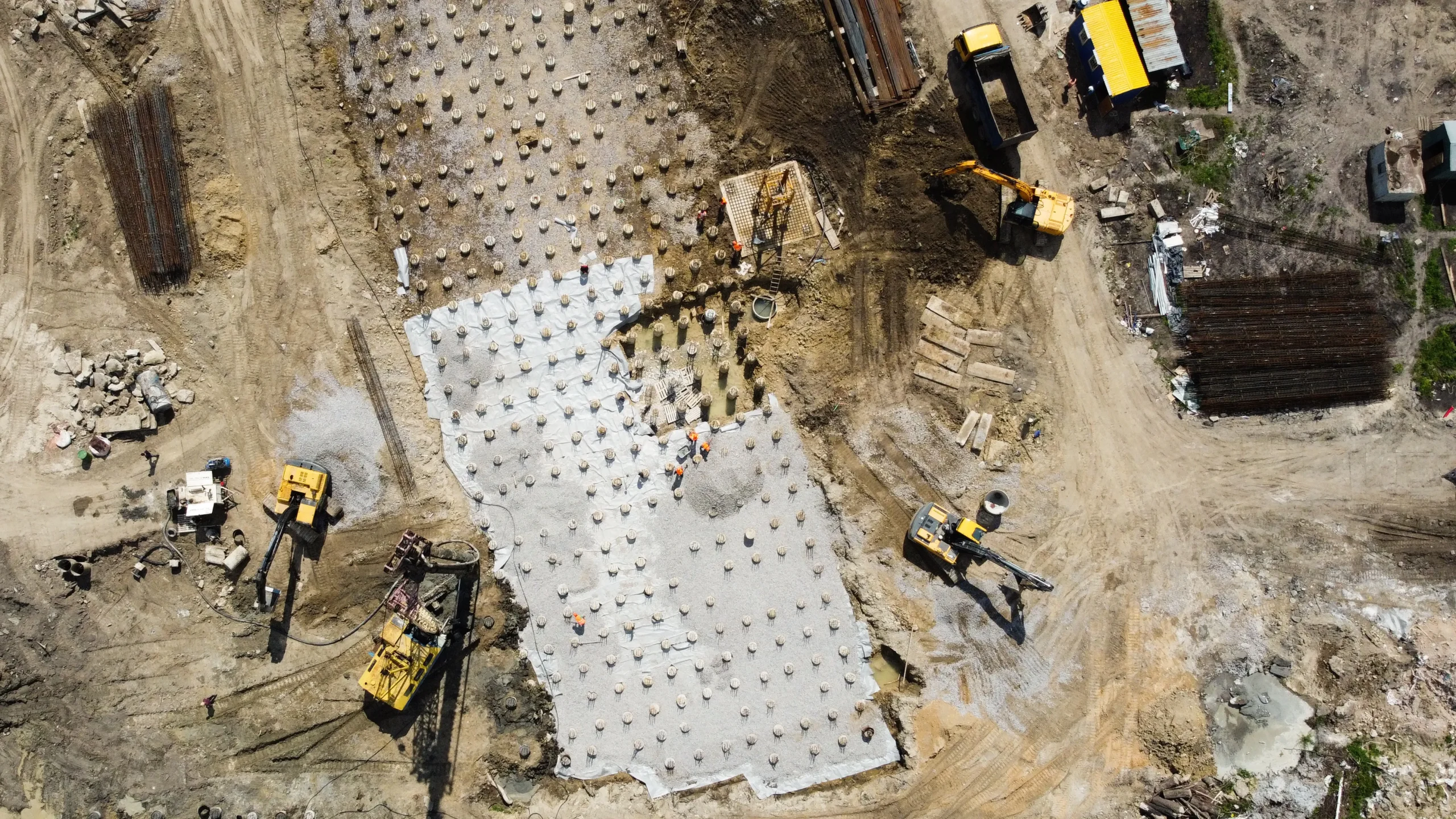
As this publication reported in October — in MGM Osaka Foundation Piling 70% Complete, Overall Progress at 11% — On Track for 2030 Opening ‘Within Budget’ — MGM revealed during its Q3 2026 earnings that it plans to increase its annual investment in the Osaka IR to approximately $1 billion. The latest affirmation signals that Moody’s considers the resulting credit burden to be absorbable within available liquidity. That said, the 6.8x Debt/EBITDA ratio persists, and it would be premature to conclude that the financial debate has been resolved.
The leverage trajectory warrants close monitoring as a key risk factor. Moody’s projects a gradual decline on the back of digital business growth and lease liability reduction through regional asset disposals. However, scenarios in which improvement stalls — due to the U.S. interest rate environment or earnings volatility in the Macau business — and downward pressure builds on the rating outlook cannot be ruled out.
The near-term checkpoints also include whether MGM China’s $750 million bond maturing in February 2027 and MGM Resorts’ $675 million bond due in April 2027 are refinanced smoothly.
From a policy perspective, it is worth emphasising that the rated entities are MGM Resorts International and MGM China — not Osaka IR Corporation itself. The project-level credit assessment of the Osaka IR is conducted under a separate framework, and caution is warranted against equating this ‘stable’ outlook directly with the safety of the overall project.
For business professionals seeking opportunities, MGM’s current liquidity position suggests that the 2027–28 peak investment period could see a pick-up in activity across design, construction, and equipment procurement. Read alongside this publication’s June analysis in JPMorgan Values MGM’s Osaka IR at ‘$19 Per Share’ — With Up to $31 Upside at Opening, the affirmation further underscores the growing weight of the Osaka IR within MGM’s overall enterprise value.
Sources
This article was produced with the assistance of AI and checked for accuracy by a human editor before publication. Please always verify against the original sources before making any business or investment decision.