




News Summary
Truist Securities has projected that the Osaka integrated resort could achieve annual EBITDA of $2 billion.
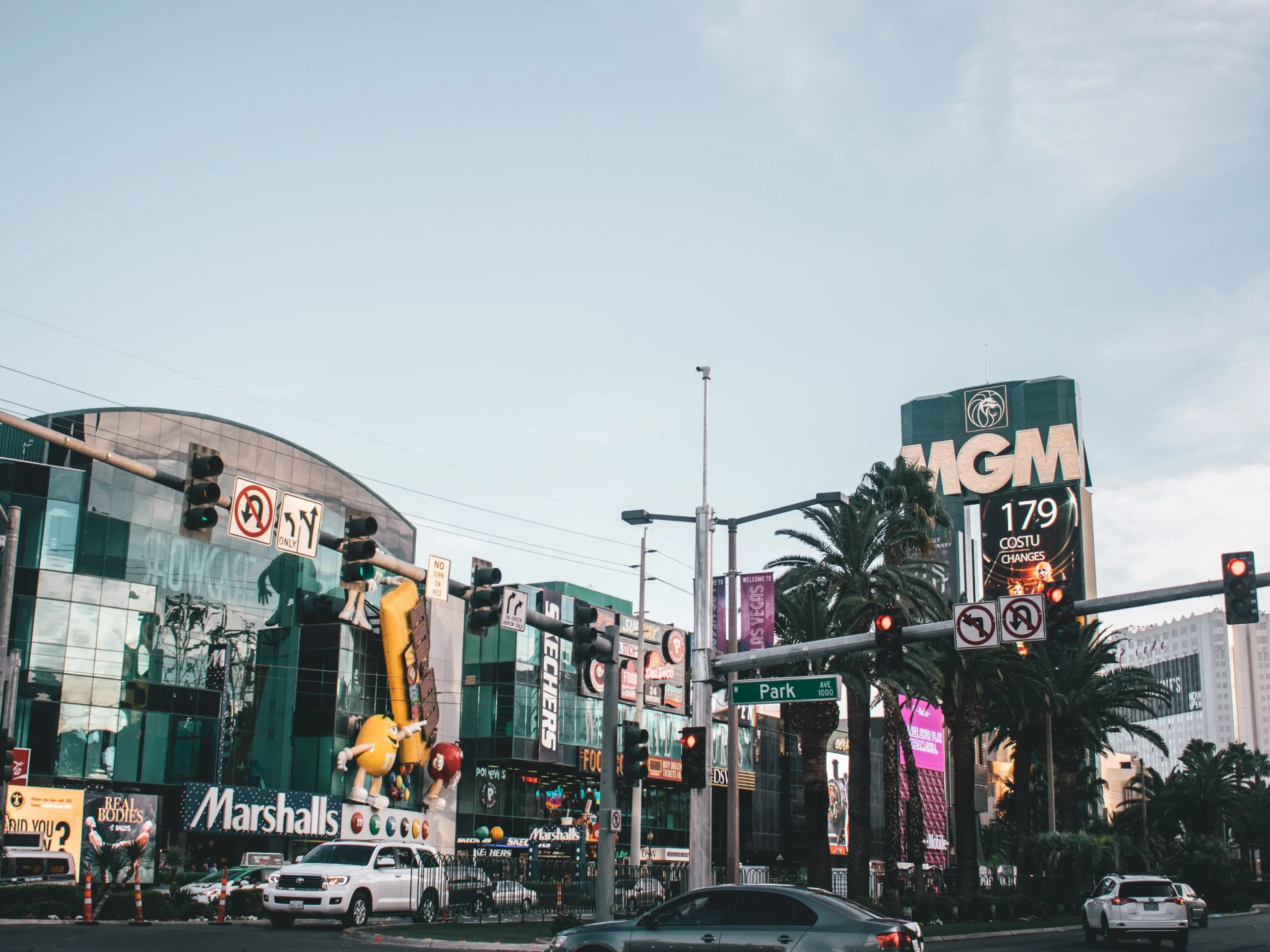
U.S. investment bank Truist Securities has published a forecast indicating that the Osaka integrated resort (IR) — operated by MGM Resorts International — could generate annual EBITDA (earnings before interest, taxes, depreciation, and amortization) of $2 billion (approximately ¥320 billion) at the joint-venture level. The analysis, reported by Inside Asian Gaming among others, estimates MGM’s attributable share of that EBITDA at approximately $800 million per year.
The projection is not Truist’s alone. MGM Resorts CEO and President Bill Hornbuckle stated at the company’s 2025 earnings call that the Osaka IR would generate more than $2 billion in annual EBITDA from day one — a figure that aligns directly with Truist’s independent estimate. On the strength of this analysis, Truist upgraded MGM stock from ‘Hold’ to ‘Buy’ and raised its price target from $42 to $55.
The Osaka IR is a large-scale project with a total investment of ¥1.513 trillion — up approximately ¥240 billion from the original budget of ¥1.27 trillion. Construction commenced in April 2025, with an opening targeted for autumn 2030.
Should Truist’s projections prove accurate, the Osaka IR would rank among the leading integrated resorts in the Asia-Pacific region, with earnings power comparable to the major gaming properties in Macau and Singapore.
Business Impact Analysis
The $2 billion annual EBITDA forecast represents an independent corroboration by Truist of MGM’s own internal targets, with wide-ranging implications across multiple sectors.
In construction and infrastructure, the projection points to potential additional investment in facility expansion and ancillary development, creating long-term contract opportunities for general contractors and equipment suppliers.
For the tourism and hospitality industry, visitor volumes expected to reach several million per year present significant supply-chain entry opportunities for hotels, restaurants, and entertainment operators in the surrounding area.
In financial and investment markets, the positive outlook could improve return projections for financial institutions involved in funding or lending to the Osaka IR, in addition to driving a re-rating of MGM Resorts’ equity.
In the IT sector, demand is expected to grow for casino management systems, facial recognition and security technologies, and cashless payment solutions.
Key risks include currency fluctuations, tightening of Japan’s domestic regulatory environment, and heightened competition should IR licenses be granted in other regions. In particular, if Osaka’s current de facto exclusivity in the Japanese IR market were to erode, the assumptions underpinning the revenue forecasts could change materially.
Editorial Review
Truist’s forecast reflects strong expectations from U.S. capital markets for the Osaka IR project.
From a structural market perspective, Japan represents one of the world’s largest untapped casino markets, with a foundation of rising inbound tourism and domestic high-net-worth demand supporting the earnings outlook.
With Macau’s Galaxy and Sands properties and Singapore’s Marina Bay Sands each recording annual EBITDA in the $3 billion to $5 billion range, a $2 billion figure for Osaka is ambitious — but not implausible.
Three principal risk factors warrant attention. First, Japan’s unique entry-frequency restrictions and admission fee system may suppress visit rates among both VIP and mass-market customers. Second, market fragmentation could result if IR licenses advance in other regions such as Nagasaki or Hokkaido. Third, visitor volumes remain vulnerable to geopolitical developments and exchange rate volatility.
On the policy front, a successful Osaka IR could serve as a model that accelerates government consideration of additional IR licenses — while simultaneously raising the stakes around problem-gambling countermeasures and community consensus-building, both of which have been long-standing concerns.
For business professionals seeking to identify commercial opportunities, the case for building supply-chain strategies around a $2 billion EBITDA-scale facility in Osaka is compelling. IT infrastructure, security systems, hospitality workforce development, and MICE-related services are areas where preparation ahead of the 2030 opening is most time-sensitive.
Readers should note that the $2 billion EBITDA figure represents the total joint-venture projection; MGM’s attributable share is estimated at approximately $800 million, per Truist’s analysis as reported by Inside Asian Gaming.
Sources
- https://asgam.com/2026/05/28/truist-mgm-osaka-could-hit-us2-billion-in-annual-ebitda/
- https://asgam.com/2025/05/01/mgm-increases-osaka-ir-equity-investment-to-us3-billion-but-bullish-on-expected-returns/
This article was produced with the assistance of AI and checked for accuracy by a human editor before publication. Please always verify against the original sources before making any business or investment decision.