

News Summary
Use the levy (30% of gross gaming revenue, of which 15% goes to local governments) and entry fees (6,000 yen, of which 3,000 yen goes to local governments) to implement measures promoting social welfare, arts and culture, tourism and the regional economy, and to eliminate harmful effects associated with casino facilities.
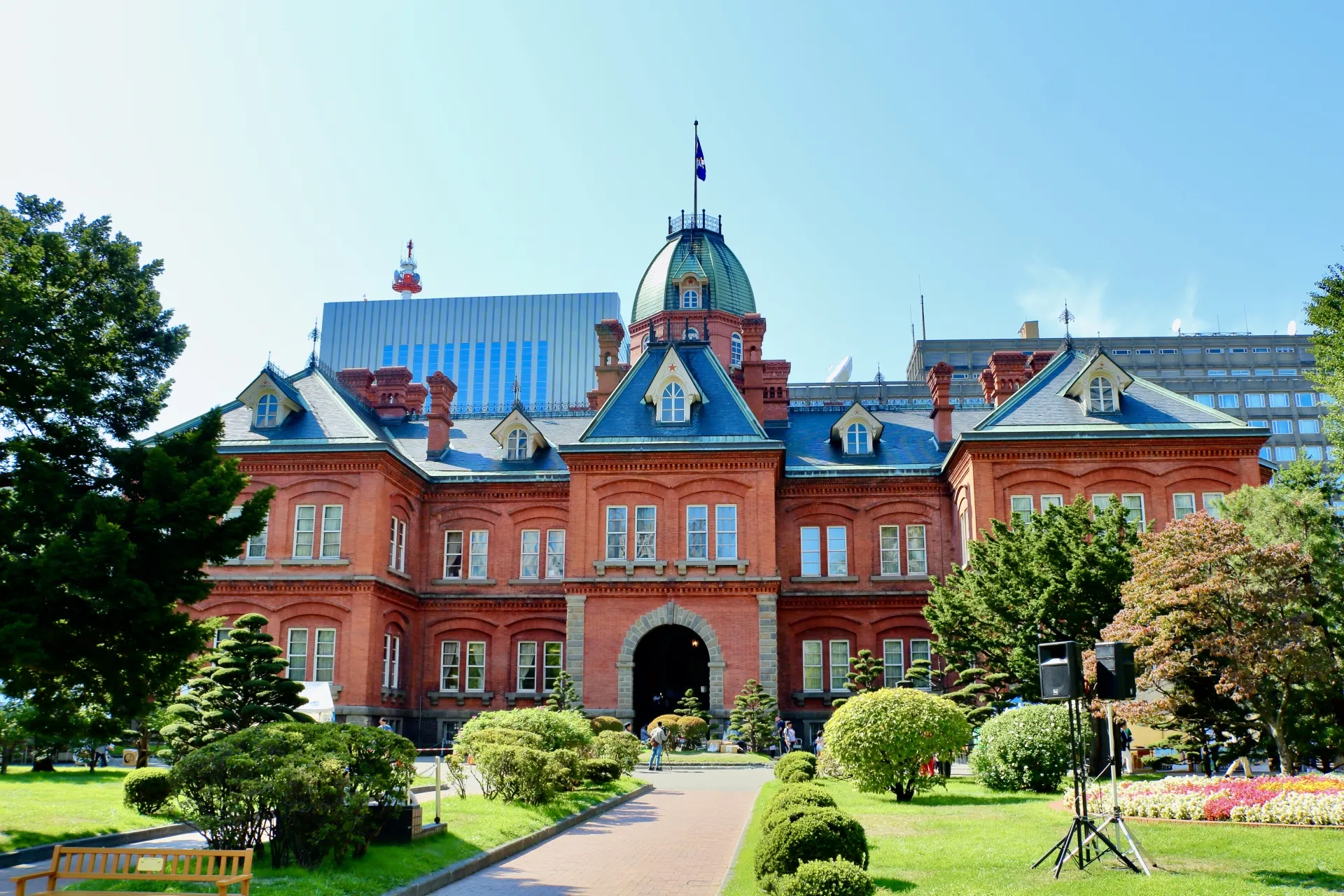
On September 7, 2026, Hokkaido presented a revised draft of its Basic Policy on Integrated Resorts (IR) to the prefectural assembly’s Special Investigative Committee on Food and Tourism, including its thinking on how casino revenue could be used. The draft states that the levy paid by casino operators (30% of gross gaming revenue, of which 15% goes to local governments) and entry fees (6,000 yen, of which 3,000 yen goes to local governments) would fund measures to promote social welfare, arts and culture, tourism and the regional economy, and to eliminate harmful effects associated with casinos.
Specific uses are listed as examples drawn from feedback submitted by municipalities across Hokkaido. They include child-rearing support, education, community healthcare and elderly welfare, as well as systems for receiving inbound visitors, overtourism countermeasures, maintaining secondary transportation, business succession support for small and medium-sized enterprises, securing medical services and physicians for gambling addiction, and crime prevention and public safety.
The following day, September 8, eight Hokkaido business organizations, including the Hokkaido Economic Federation, submitted a petition to Governor Naomichi Suzuki calling for the realization of an IR. As of September 8, however, the governor had not indicated whether Hokkaido will apply during the national application window scheduled for May to November 2027.
Business Impact Analysis
In healthcare and welfare, the most significant point is that addiction countermeasures are framed as a present-day issue rather than one that arises only after an IR opens. According to the draft summary, Hokkaido has only seven specialized addiction treatment facilities, located solely in the Dou-o and Dohoku tertiary medical regions; recovery facilities exist only in Sapporo; and self-help groups are absent in 11 secondary medical regions. The draft states that effective measures are needed not as a future problem after an IR opens, but as a problem that exists now. With medical service capacity and physician recruitment included among the example uses, providers of specialized treatment and recovery support may see demand that does not depend on whether the IR succeeds.
In tourism and transportation, the example uses lean toward the challenges of receiving visitors. Items include multilingual support and visitor attraction for inbound travelers, overtourism countermeasures, promotion of wide-area tourism, and secondary transportation measures such as maintaining bus routes and sightseeing loop buses. Because the draft envisions spreading IR visitors across all of Hokkaido, strengthening onward transportation is a logical use of the revenue, and transport operators and tourism digital-transformation providers may find points of contact.
For the regional economy, examples include business succession and financial support for small and medium-sized enterprises, promotion of local specialty products, revitalization of primary industries and securing their workforce, and revitalization of town centers and shopping streets. The business community’s petition urging the governor to move the review forward appears to reflect expectations of such regional spillover. Still, the revenue would only arise after opening, and its scale will depend on facility size and visitor numbers, which should be factored into any assessment.
Editorial Review
The first point to note is that the list does not represent Hokkaido’s decision on spending priorities or allocations. What the draft lists are examples drawn from municipal feedback, and no ranking is indicated. On the page illustrating the business structure, the social return column likewise lists child-rearing, education, healthcare and nursing care, community transportation and stronger addiction countermeasures side by side. The broad categories follow the purposes set out in the IR Development Act, so the list is best read as applying the national framework to Hokkaido’s local challenges rather than as an additional prefectural policy.
Even so, presenting example uses before a decision on whether to pursue an IR, or on a candidate site, carries meaning. The draft cites building public understanding as a challenge, and showing where casino revenue would flow back into daily life can serve as material for consensus-building. As this publication reported in May, Governor Suzuki had indicated he would present a revised draft around September, and the substance has now emerged on that timeline.
Hokkaido’s approach to addiction countermeasures becomes clearer when compared with Osaka. Osaka Prefecture and Osaka City compiled a basic concept for an addiction support center ahead of their IR’s opening (see this publication’s September 2 report). Hokkaido’s draft likewise notes that, by including measures in an area development plan and concluding an implementation agreement with an operator, necessary measures can be rolled out without waiting for a casino license or the IR’s opening. Showing that countermeasures can begin before opening is likely to matter when explaining the plan to those with concerns.
The key remaining risk is that the scale of the revenue cannot be foreseen at all. Both the levy and entry fees arise only after opening, Hokkaido’s market is considered smaller than those of major metropolitan areas, and discussion of facility size requirements has yet to take place. The more varied the example uses, the more difficult the eventual task of allocating limited funds. With the governor yet to announce an application decision, little time remains before the May to November 2027 application window.
For business professionals seeking opportunities, the example uses are worth reading as a list of the challenges local governments face. Addiction treatment and recovery support, secondary transportation, multilingual services and business succession are issues Hokkaido municipalities confront regardless of whether an IR materializes. Building relationships with programs already moving without IR funding may also position companies as early movers should the bid advance.
Sources
- https://www.pref.hokkaido.lg.jp/fs/1/3/2/1/0/6/1/6/_/%E3%80%90%E8%B3%87%E6%96%992-2%E3%80%91%20IR%E9%96%A2%E3%81%99%E3%82%8B%E5%9F%BA%E6%9C%AC%E7%9A%84%E3%81%AA%E8%80%83%E3%81%88%E6%96%B9_%E6%94%B9%E8%A8%82%E6%A1%88v3%E3%81%A6%E3%81%99%E3%81%A84.pdf
- https://www.pref.hokkaido.lg.jp/fs/1/3/2/1/0/5/2/3/_/%E3%80%90%E8%B3%87%E6%96%992-1%E3%80%91%20%E3%80%8C%E7%B5%B1%E5%90%88%E5%9E%8B%E3%83%AA%E3%82%BE%E3%83%BC%E3%83%88(IR)%E3%81%AB%E9%96%A2%E3%81%99%E3%82%8B%E5%9F%BA%E6%9C%AC%E7%9A%84%E3%81%AA%E8%80%83%E3%81%88%E6%96%B9%E3%80%8D%E6%94%B9%E8%A8%82%E3%83%BB%E6%A1%88(%E6%A6%82%E8%A6%81)v2.pdf
- https://news.yahoo.co.jp/articles/a3a34b2434efeb585e658c641c8082dafa34eb2c
- https://www.pref.hokkaido.lg.jp/kz/kkd/integrated_resort.html
This article was produced with the assistance of AI and checked for accuracy by a human editor before publication. Please always verify against the original sources before making any business or investment decision.