

News Summary
New station plans for Morinomiya, hotel and high-rise condominium development on Yumeshima — redevelopment is now moving forward simultaneously across multiple areas within Osaka.
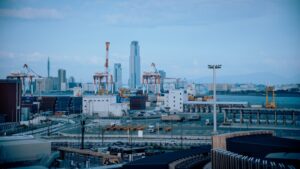
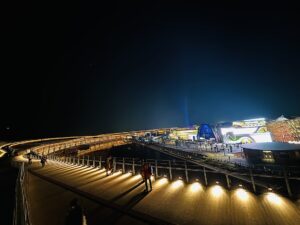
The Nikkei has reported that redevelopment initiatives by Osaka Prefecture and the City of Osaka are advancing simultaneously across multiple districts. In the Morinomiya area, plans are progressing for a new Osaka Metro Chuo Line station — provisionally named ‘Morinomiya New Station’ — scheduled to open in spring 2028, with the project designed to strengthen the area as a key transportation hub. Meanwhile, on Yumeshima, the artificial island that hosted the 2025 World Expo, hotel developments tied to the integrated resort (IR) project are being joined by a growing number of high-rise condominium construction plans. Taken together, Osaka’s urban redevelopment is emerging as a multi-layered city-building effort in which transport infrastructure, accommodation supply, and residential development advance in tandem — creating wide-ranging impact and business opportunities across the construction, real estate, and tourism sectors. The Morinomiya station site covers approximately 115,000 square metres of land formerly occupied by the Morinomiya rolling stock depot, and will make use of vehicle stabling facilities originally installed within that depot to support the Expo.
Business Impact Analysis
In the construction and infrastructure sector, concurrent progress on the Morinomiya station works and hotel and high-rise condominium construction on Yumeshima is expected to concentrate orders among general contractors and subcontractors, intensifying competition for materials procurement and skilled labour. Yumeshima in particular requires soft-ground countermeasures, giving firms with specialist expertise in ground improvement and pile foundation work a significant competitive edge.
In real estate and investment, land values around Morinomiya are expected to rise, while the high-rise condominium plans on Yumeshima have the potential to generate fresh residential demand in the Osaka Bay Area.
In the tourism and hotel sector, hotel development on Yumeshima is gathering momentum ahead of the anticipated IR opening, and competition among international hotel brands for a foothold in the area is expected to intensify.
In IT and technology, opportunities are expanding for the introduction of smart city solutions and Mobility as a Service (MaaS) platforms.
At the same time, the simultaneous advancement of multiple large-scale projects heightens concerns over rising construction costs, labour shortages, and schedule delays — risks that could, depending on how conditions evolve, have an adverse effect on the regional economy.
From a rental market perspective, data compiled by LIFULL HOME’S as of February 2026 shows that average monthly rents for studio, 1K, and 1DK units in the Morinomiya area stand at JPY 75,300 — comparatively affordable against Umeda (JPY 80,200), Shinsaibashi (JPY 81,100), and Yodoyabashi (JPY 93,100). Current price levels, ahead of full-scale development, are likely to attract industry attention as a potential entry point for rental investment and residential supply.
Underpinning demand is the Osaka Metropolitan University Morinomiya Campus, which opened in September 2025 and serves approximately 6,000 regular users and 16,000 students. Further reinforcing the outlook, the ‘Phase 1.5 Development’ planned for spring 2028 includes a large-scale arena with a capacity exceeding 10,000, which is expected to generate sustained visitor traffic and support surrounding commercial, accommodation, and short-term rental demand.
Editorial Review
The simultaneous rollout of Osaka’s redevelopment across multiple axes — Morinomiya and Yumeshima, a new station, hotels, and high-rise condominiums — is emblematic of the city’s accelerating urban strategy as it looks toward the IR opening in 2030. With the public tender for Phase 2 development on Yumeshima now getting underway, the hotel and condominium plans can be seen as a natural extension of that process (see previous coverage: Yumeshima Phase 2 Development RFP to Launch in Late June, Operator Decision Expected February 2027).
From a market structure perspective, the new Morinomiya station will dramatically improve transport access to the eastern Osaka Castle district and could establish a new urban core alongside Umeda and Namba. Its proximity to Osaka Castle is also likely to provide a meaningful boost to inbound tourism.
Hotel and high-rise residential development on Yumeshima is advancing not as a single IR facility but as a comprehensive mixed-use development across the entire area, driving increased stratification of the real estate market.
On the risk side, the simultaneous progression of multiple large-scale projects raises serious concerns about tightening supply of construction workers and materials. The potential mismatch between transport infrastructure delivery timelines and development schedules also remains a persistent risk (see previous coverage: JR Sakurajima Line Extension to Yumeshima Targeted for the Late 2030s — Time Lag with IR Opening Remains a Challenge).
In terms of policy implications, Osaka Prefecture and the City of Osaka are clearly committed to advancing urban development not as isolated projects but as an integrated, area-wide strategy — making the prioritisation of infrastructure investment a focal point for future policy debate.
For business professionals seeking opportunities, areas worthy of close attention include commercial and office demand arising from station-front development in Morinomiya, hospitality talent development linked to hotel brand attraction on Yumeshima, and smart home technology implementation expected to accompany high-rise condominium projects.
As complex, multi-front urban development shifts into full gear, the imperative to identify precisely which layer of this ecosystem a given business can enter is becoming increasingly critical.
What sets the Morinomiya development apart from comparable projects is the concentration of three distinctly different functions — academia, entertainment, and transportation — within a single location. The combination of a new Osaka Metropolitan University campus, an arena with a capacity of approximately 10,000, and a new Osaka Metro Chuo Line station in the same district is rare among domestic urban development projects.
The resulting dual-layer demand structure — university affiliates and students generating a steady baseline on weekdays, while arena visitors drive commercial, dining, and accommodation consumption at weekends — offers a meaningful risk diversification advantage over redevelopment schemes dependent on a single function.
Sources
- https://www.nikkei.com/article/DGXZQOUF1280M0S6A610C2000000/
- https://www.homes.co.jp/cont/press/rent/rent_01344/
This article was produced with the assistance of AI and checked for accuracy by a human editor before publication. Please always verify against the original sources before making any business or investment decision.