





News Summary
JPMorgan estimates that MGM Osaka could add up to $31 per share to MGM’s stock value at the time of opening, and has raised its price target from $46 to $53.
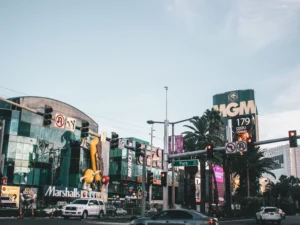
JPMorgan analyst Daniel Politzer has raised his price target on MGM Resorts (NYSE: MGM) from $46 to $53, maintaining an ‘Overweight’ rating, according to reports from Casino.org and Investing.com. Central to the upgrade is Politzer’s valuation of the Osaka IR: he estimates that MGM Osaka, slated to open in 2030, could add as much as $31 per share to MGM’s stock price at the time of opening — equivalent to approximately 64.5% upside relative to the June 12 closing price. On a present-value, discounted basis, Politzer ascribes $19 per share to the Osaka IR, a figure that is not included in the $53 price target. As a benchmark, the analyst cited Marina Bay Sands in Singapore, widely regarded as the world’s most profitable casino hotel.
Business Impact Analysis
The most significant takeaway from this assessment is that the Osaka IR has, for the first time, been assigned a concrete per-share dollar value. This publication has previously reported that Truist, the U.S. brokerage, projected the Osaka IR joint venture could generate annual EBITDA of $2 billion in total — approximately $800 million attributable to MGM’s stake — as covered in our May 2026 report. JPMorgan’s latest analysis translates that earnings power into share-price terms, quantifying it as up to $31 at opening and $19 on a present-value basis.
For the construction and infrastructure sector, the fact that financial markets are placing a high valuation on this $8.9 billion project — of which MGM’s 40% stake amounts to approximately $3.56 billion, with Orix as partner — provides meaningful capital-market validation for the ongoing design and construction phase. It should be noted that the $8.9 billion figure is sourced from Casino.org and does not directly correspond to the yen-denominated total investment figure of ¥1.5130 trillion previously reported by this publication, due to differences in exchange rates and the scope of costs included.
For the tourism and hospitality industry, the fact that Marina Bay Sands was cited as a comparable is itself a strong indicator of the expected revenue potential of the Osaka IR, and should prompt supply-chain participants to evaluate their positioning on the assumption of a Marina Bay Sands-caliber destination.
For the financial and investment community, the valuation of the Osaka IR has emerged as a focal point in ongoing acquisition negotiations. In response to the $48.30-per-share takeover bid from People Inc. (NASDAQ: PPLI, formerly IAC), JPMorgan has indicated that ‘there is room for the offer price to be raised, particularly if the Osaka IR receives a meaningful valuation.’ The value of the Osaka IR has effectively become the central argument in the case that the current bid price is too low.
Editorial Review
A few important caveats are in order. The $19 and $31 figures are JPMorgan’s proprietary estimates, not established corporate valuations. The $31 upside figure, in particular, is conditional — it applies only if MGM remains a publicly listed company at the time of the 2030 opening. As this publication has already reported (see June 2026 report), Seaport analysts have flagged the possibility that, should the People Inc. acquisition succeed, MGM could divest its Asian assets, including Macau and Osaka. In other words, the two narratives — ‘the Osaka IR commands a high valuation’ and ‘the Osaka IR could become an acquisition target’ — are two sides of the same coin.
From a market-structure perspective, Politzer acknowledges Japan’s demographic trends and macro environment as ‘structural concerns,’ but argues that these are more than offset by the momentum of inbound tourism demand, supportive government policy, the regional scale of Osaka, and the strong likelihood that MGM Osaka will be Japan’s only IR at the time of its opening. The ongoing progress toward deflation exit and wage growth under the Takami Sanae administration is also cited as a tailwind for domestic demand.
Key risk factors include: first, potential changes in the project’s ownership structure depending on the outcome of the acquisition negotiations; second, market fragmentation should IR licenses be granted in other Japanese regions; and third, fluctuations in visitor volumes and yen-denominated revenues driven by exchange-rate volatility. The Marina Bay Sands comparison should also be read with some caution, as Singapore and Japan differ significantly in terms of entry regulations, tax regimes, and customer demographics, meaning their revenue structures are not directly comparable.
For business professionals assessing commercial opportunities, the very fact that financial markets have begun attaching a concrete price tag to the Osaka IR is itself an important signal. Companies operating in construction, facilities, IT infrastructure, hospitality, and MICE-related sectors would be well-served by stress-testing their supply-chain strategies against the assumption that the Osaka IR could become a Marina Bay Sands-caliber revenue-generating facility. At the same time, it is prudent to factor in the uncertainty that the project’s controlling entity may change depending on the outcome of the acquisition process.
Finally, the valuations cited in this article are drawn from media outlets — Casino.org and Investing.com — that reported secondarily on the JPMorgan research note. The original report is not publicly available.
Sources
- https://www.casino.org/news/jp-morgan-mgm-japan-casino-could-tack-on-31-to-share-price/
- https://www.investing.com/news/analyst-ratings/jpmorgan-raises-mgm-resorts-stock-price-target-on-acquisition-potential-93CH-4739580
This article was produced with the assistance of AI and checked for accuracy by a human editor before publication. Please always verify against the original sources before making any business or investment decision.