


News Summary
Hokkaido revised its IR guideline around the idea of ‘one IR formed across the whole of Hokkaido,’ without naming a candidate site; 106 of its 179 municipalities said they have no interest at the present stage.
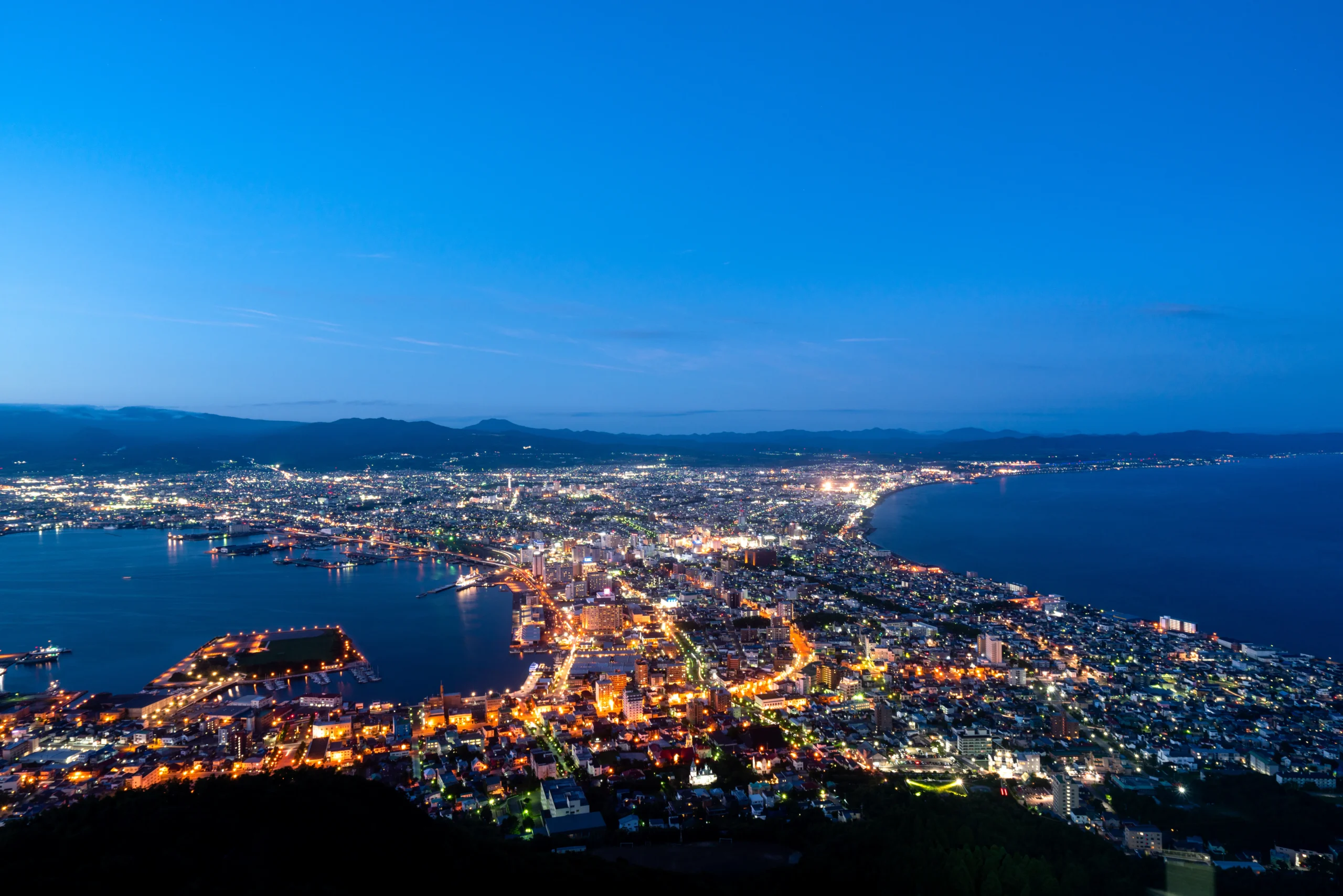
On September 7, 2026, Hokkaido Prefecture presented a revised draft of its ‘Basic Policy on Integrated Resorts,’ the guideline for its IR bid, to the prefectural assembly’s Special Investigative Committee on Food and Tourism. At its core is the idea of ‘one IR formed across the whole of Hokkaido’: using IR facilities as an anchor to send visitors out to every region of Hokkaido and encourage stays across the prefecture. The draft does not identify a candidate site. In a survey of all 179 municipalities in Hokkaido released at the same time, only two, Tomakomai City and Hakodate City (which answered ‘cannot say either way’), expressed interest in hosting an IR within their own boundaries, while 106 answered that they have ‘no interest at the present stage.’ The draft also sets out the prefecture’s intention to ask the national government to relax facility standards for international conference and accommodation facilities, citing a location environment that differs from that of major metropolitan areas. The original policy, adopted in April 2019, had named the Uenae district of Tomakomai City as the preferred candidate site, but in November that year the prefecture decided not to apply, judging that adequate environmental consideration could not be completed in time; this revision is the first comprehensive overhaul since then.
Business Impact Analysis
The first point construction and real estate sector participants should note is that the revised draft does not identify a candidate site. In the municipal intent survey, the only two entities that expressed any interest were Tomakomai City—which indicated interest under the current facility requirements—and Hakodate City, which responded ‘cannot say either way.’ Tomakomai City itself has formally requested that the prefecture clarify ‘the conditions for candidate site identification’ and ‘the roadmap going forward,’ meaning the prerequisite conditions for site selection have yet to be established. On the other hand, 71 municipalities stated they are interested in an IR being developed somewhere in Hokkaido outside their own boundaries. The data reflects a clear structural pattern: enthusiasm for visitor attraction and broad-area tourism is widely shared across the prefecture, while the number of local governments willing to serve as host is extremely limited.
For MICE and tourism-related businesses, a notable development is that the revised draft explicitly incorporates the prefecture’s intention to request regulatory relaxation from the national government. Under the heading of directions for consideration regarding core facilities, the document states that the prefecture will ‘request that the national government relax the facility standards for international conference facilities and accommodation facilities, in order to expand the possibilities for business operations that leverage Hokkaido’s characteristics, given its location environment differs from that of major metropolitan areas.’ This represents the prefecture’s formal acknowledgment in an official document that the facility scale envisaged under the current Act on Development of Specified Integrated Resort Districts does not align with Hokkaido’s market scale. The document also identifies coordination and functional division with municipalities that are advancing MICE attraction efforts within the prefecture as a consideration for international conference and exhibition facilities.
Of relevance to both the financial and construction sectors is the description of the envisaged project structure. The revised draft assumes the formation of a special purpose company (SPC), with investors comprising an IR operator (assumed to be an overseas entity) and domestic companies, and financing structured as a syndicated loan centered on domestic megabanks. The document goes further, stating that ‘participation in management and business operations by Hokkaido-based companies through equity investment and other means is necessary.’ Maximizing local procurement and achieving profitability at the operating level for each individual facility are also stated as objectives, signaling to Hokkaido-based companies that there is scope for involvement both as investors and as business counterparts.
Editorial Review
To accurately characterize this revised draft, it is essential to understand what it is not: it is neither a decision to pursue an IR bid nor a selection of a candidate site. The document functions solely as a set of guidelines to inform the prefecture’s future deliberations. The revised draft itself concludes by stating that ‘it will be important to continue deliberations at each stage’ on outstanding issues such as clarifying the specific functions, scale, commercial viability, and operational benefits of an IR in Hokkaido—a posture that defers substantive decisions to a later date. The candidate site selection process previously reported by this publication has, through this revision, only just arrived at the threshold of establishing the conditions for that process.
The concept of ‘one IR formed across the whole of Hokkaido’ is open to two interpretations. One reading treats it as a pragmatic design philosophy for a regional IR: rather than depending on the drawing power of a single facility, value is created by distributing visitors across the whole prefecture. The other reading—which cannot be dismissed—is that the phrase is a positive reframing of the prefecture’s current inability to identify a candidate site. Which interpretation proves correct will depend on the specifics of the functions and scale to be defined going forward, and on the extent to which secondary transportation plans capable of distributing visitors are actually developed.
The single most consequential data point in numerical terms is that 106 of 179 municipalities responded ‘no interest at the present stage.’ The survey achieved a 100% response rate, making it an unfiltered reflection of sentiment across the prefecture. IRs are positioned as privately developed and operated ventures that nonetheless carry a high degree of public interest, and building public understanding among residents of Hokkaido is cited as a challenge in the revised draft itself. If the process advances to candidate site selection while a majority of municipalities remain uninterested, the burden of building social consensus risks being concentrated entirely on whichever community is ultimately chosen.
On the topic of social impact countermeasures, this publication commends the revised draft for presenting concrete current data. The document notes that addiction specialist medical institutions within Hokkaido are found only in the Doo and Dohoku tertiary medical zones—seven facilities in total—that six secondary medical zones have no such facilities, and that recovery support facilities exist only in Sapporo. It then explicitly states that ‘these are not future problems to be addressed after an IR opens, but present problems that require effective countermeasures now.’ The intended uses of casino revenue are also set out in the revised draft, compiled as a list of examples drawn from opinions submitted by municipalities. Addiction countermeasures appear as one category within that breakdown; a detailed analysis of the revenue allocation proposals is covered in a separate article.
For business professionals seeking to identify opportunities, the practical near-term focus should be on tracking regulatory developments rather than predicting a candidate site. Whether the prefecture’s request for relaxed facility standards is granted by the national government will materially affect both the required investment scale and the profile of operators who can feasibly participate. The national government’s second-round application window has been set for May to November 2027, and the prefecture’s survey documentation explicitly states that the municipal intent survey was conducted regardless of whether Hokkaido intends to meet that deadline. Whether the prefecture is working to align with that timeline or planning beyond it will need to be read from how its deliberations unfold following this revision.
Update: Hokkaido formally adopted the revised policy on October 15, 2026. The substance is largely unchanged from the draft.
Sources
- https://www.pref.hokkaido.lg.jp/fs/1/3/2/1/0/5/2/3/_/%E3%80%90%E8%B3%87%E6%96%992-1%E3%80%91%20%E3%80%8C%E7%B5%B1%E5%90%88%E5%9E%8B%E3%83%AA%E3%82%BE%E3%83%BC%E3%83%88(IR)%E3%81%AB%E9%96%A2%E3%81%99%E3%82%8B%E5%9F%BA%E6%9C%AC%E7%9A%84%E3%81%AA%E8%80%83%E3%81%88%E6%96%B9%E3%80%8D%E6%94%B9%E8%A8%82%E3%83%BB%E6%A1%88(%E6%A6%82%E8%A6%81)v2.pdf
- https://www.pref.hokkaido.lg.jp/fs/1/3/2/1/0/6/1/6//%E3%80%90%E8%B3%87%E6%96%992-2%E3%80%91%20IR%E9%96%A2%E3%81%99%E3%82%8B%E5%9F%BA%E6%9C%AC%E7%9A%84%E3%81%AA%E8%80%83%E3%81%88%E6%96%B9%E6%94%B9%E8%A8%82%E6%A1%88v3%E3%81%A6%E3%81%99%E3%81%A84.pdf
- https://www.pref.hokkaido.lg.jp/fs/1/3/2/1/0/5/2/5/_/%E3%80%90%E8%B3%87%E6%96%992-5%E3%80%91%20IR%E3%81%AB%E4%BF%82%E3%82%8B%E5%B8%82%E7%94%BA%E6%9D%91%E6%84%8F%E5%90%91%E8%AA%BF%E6%9F%BB(%E6%A6%82%E8%A6%81).pdf
- https://www.pref.hokkaido.lg.jp/kz/kkd/integrated_resort.html
This article was produced with the assistance of AI and checked for accuracy by a human editor before publication. Please always verify against the original sources before making any business or investment decision.