

News Summary
Kankeiren Chairman Matsumoto stated that Yumeshima’s development should embody the spirit of the Expo, and expressed clear concerns about the proposed motor racing circuit.
According to reporting by the Nikkei, Masayoshi Matsumoto, Chairman of the Kansai Economic Federation (Kankeiren), has called for the post-Expo redevelopment of Yumeshima to embody the spirit of the 2025 Osaka-Kansai World Exposition. He is understood to be advocating that the guiding concept of the Expo — ‘Designing Future Society for Our Lives’ — should carry through to the aftersite development. Separately, the Sankei Shimbun reports that Matsumoto expressed strong opposition to a proposal to build a motor racing circuit on Yumeshima, using notably forceful language, stating he would ‘absolutely not allow it.’ Kankeiren is the leading business federation in the Kansai region and wields considerable influence over the overall development policy for Yumeshima, including the Osaka integrated resort (IR). Matsumoto’s remarks are drawing attention as a clear signal of the business community’s position on aftersite utilisation, coming as the solicitation process for Phase 2 zone development operators moves forward.
Business Impact Analysis
The remarks by the head of Kankeiren carry significant business implications, given their potential to directly shape the development policy for Yumeshima’s Phase 2 zone. For the construction and infrastructure sector, the expressed opposition to the circuit proposal may force developers and contractors that had been considering involvement in motorsport-related facilities to revisit their plans. Conversely, the statement suggests that priority will be given to demand for theme-based facilities consistent with the Expo’s legacy — such as advanced technology exhibition centres and life science-related facilities. In the tourism and hotel sector, the type of entertainment facilities ultimately developed will shift the target visitor demographic, with downstream effects on hotel development plans and the tenant mix for food, beverage, and retail around the IR. In the investment and finance sector, any failure to build consensus among business stakeholders raises the perceived risk of schedule delays to Phase 2 development. In the IT and technology space, should smart-city-style development be pursued as part of the Expo’s legacy, opportunities are expected to expand across digital infrastructure and Mobility-as-a-Service (MaaS) related businesses.
Editorial Review
Chairman Matsumoto’s remarks lay bare a divergence in direction among stakeholders over the post-Expo development of Yumeshima. As this publication reported in June, Osaka Prefecture and the City of Osaka are advancing the solicitation of development operators for the Yumeshima Phase 2 zone, and the utilisation of approximately 42 hectares of aftersite land is a pivotal issue for the future of the Kansai economy.
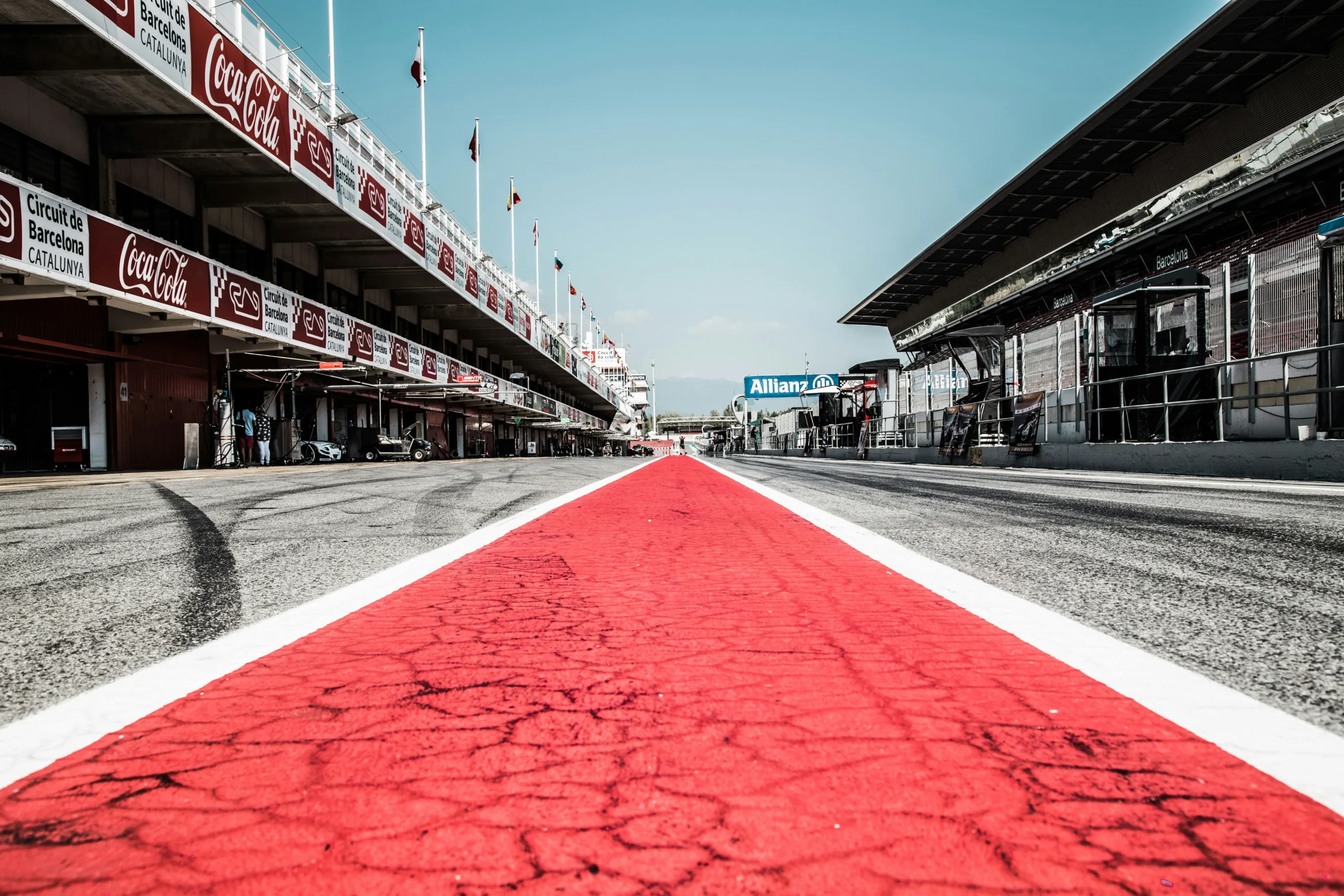
The circuit concept has attracted a degree of support as a high-footfall content offering. Japan’s flagship circuit, Suzuka, has long faced criticism over access difficulties, and a viable alternative on Yumeshima — with its direct transport links — would carry considerable significance. At the same time, environmental concerns around noise, vibration, and increased traffic, as well as questions of compatibility with the ‘international MICE and tourism hub’ concept that the IR is pursuing, are entirely legitimate — as the Kankeiren chairman’s remarks reflect.
On the risk side, any delay in aligning the development vision among the business community, government, and prospective operators could affect the operator-selection schedule, currently targeted for February 2027. It should also be noted that Yumeshima Phase 2 Master Plan Ver. 3.0 incorporates an EXPO memorial museum and the partial preservation of the Expo Ring, making the optimisation of facility placement and circulation flows within the constrained zone a genuine challenge.
From a policy standpoint, the central question is how far the principle of carrying forward the Expo’s spirit will be embedded in the formal solicitation requirements. If it remains an abstract aspiration, operators will retain broad discretion; if it is translated into concrete KPIs, the range of viable proposals will narrow considerably.
For business professionals seeking opportunities, the retreat of the circuit proposal represents an entry barrier for motorsport-related participants, but it correspondingly improves the prospects for proposals aligned with Expo themes — advanced technology, healthcare, and environmental technology in particular. Project designs conceived with a clear complementary relationship to the IR itself are likely to prove competitively advantageous in the solicitation process.
Sources
- https://www.nikkei.com/article/DGXZQOUF145KR0U6A710C2000000/
- https://www.sankei.com/article/20260714-HLVNVLGE2JKW3EZNV3QLLRHR3Q/
This article was produced with the assistance of AI and checked for accuracy by a human editor before publication. Please always verify against the original sources before making any business or investment decision.