
News Summary
Hokkaido’s Expert Roundtable on Integrated Resorts completed all six scheduled sessions; the revision of the prefecture’s ‘Basic Policy on Integrated Resorts’ has advanced to a phase that includes the identification of a candidate site.
Inside Asian Gaming (IAG), an Asia-focused gaming industry publication, reported on August 19, 2026, that an expert panel convened by Hokkaido Prefecture to explore an integrated resort (IR) bid has advanced the process to the site selection phase.
The panel in question is Hokkaido’s ‘Expert Roundtable on Integrated Resorts,’ established by the prefectural government. According to documents released by the prefecture, the roundtable held a total of six sessions, beginning with its inaugural meeting on January 17, 2026, and concluding with its sixth and final session on August 18, 2026. The panel was established to revise the ‘Basic Policy on Integrated Resorts’ originally formulated in fiscal year 2019. The revision — classified as a non-statutory process — explicitly includes ‘identification of a candidate site’ among its agenda items.
Separately, GGRAsia reported that three casino operators and twelve domestic companies responded to a survey on Hokkaido’s IR prospects. However, no reference to this survey appears to have been included in the draft revised policy released by the prefecture, and this publication has been unable to independently verify the timing or the entity that conducted it.
One critical caveat bears emphasis: the prefectural government has not publicly stated whether it intends to submit an application for an IR development zone. The draft revised policy states only that the prefecture will ‘continue working toward making a bid,’ and no formal decision to pursue an IR has been made.
Business Impact Analysis
The milestone of revising Hokkaido’s ‘Basic Policy on Integrated Resorts’ carries potential implications across multiple sectors.
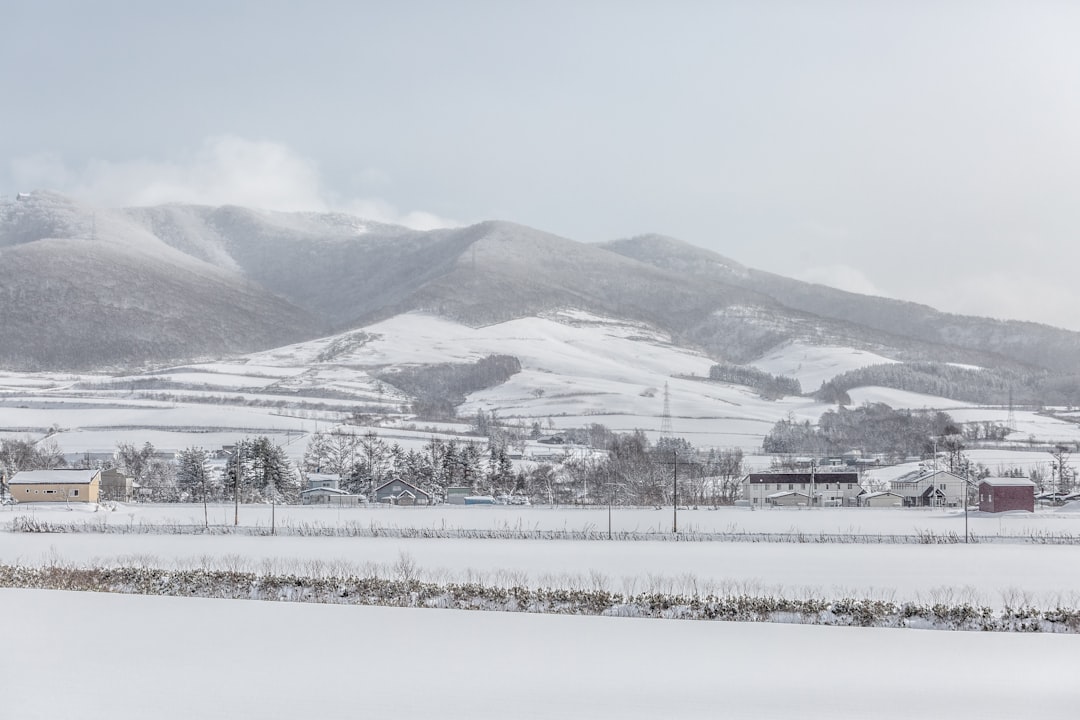
In construction and infrastructure, the identification of a candidate site would generate demand for civil engineering and architectural work. Given Hokkaido’s extreme climate, contractors with expertise in cold-region construction techniques and ground stabilization will find particular commercial opportunity. However, given that environmental considerations at the candidate site were the decisive factor behind the prefecture’s decision not to submit an application in the previous review cycle, companies should factor in the likelihood of a more extensive environmental impact assessment workload compared with typical projects.
In tourism and hospitality, there is potential for significant synergy between an IR and Hokkaido’s existing assets — ski resorts, culinary culture, and natural landscapes — though managing the region’s pronounced seasonal demand fluctuations will be a key operational challenge. The draft revised policy’s reference to a network of twelve airports across the prefecture suggests that the underlying business model envisions a broad-based, multi-destination visitor circulation strategy.
In investment and finance, with Osaka’s IR advancing as Japan’s first approved project, Hokkaido would represent a second domestic opportunity, and the trajectory of operator selection and financing structures will be closely watched. If reports that multiple parties — including domestic companies — have expressed interest are accurate, competitive bidding dynamics could improve project terms.
In IT and technology, demand is anticipated for smart-IR infrastructure, payment systems, and security technology solutions.
On the risk side, key concerns include Hokkaido’s population scale, constraints on transportation access, the community consent process, and political scheduling uncertainty — all of which introduce the possibility of delays or a reduction in project scope.
Editorial Review
Any assessment of Hokkaido’s IR ambitions must be grounded in the prefecture’s prior experience: in 2019, it chose not to submit an application. Having formulated its ‘Basic Policy on Integrated Resorts’ in fiscal year 2019 and evaluated three municipalities that had submitted proposals or expressions of interest — Kushiro, Tomakomai, and Rusutsu Village — the prefecture identified the Uenae district of Tomakomai as its preferred candidate site on the basis of transportation accessibility and projected economic impact. Nevertheless, in November of that year, the prefecture concluded that it was impossible to give adequate consideration to environmental issues at the candidate site within the available timeframe, and accordingly decided against applying. The reports now describing an advance to the ‘site selection phase’ must therefore be read in the context of a resumption after that earlier suspension.
Several environmental changes underpin this restart. The draft revised policy cites the national government’s first approval of an IR development zone plan in fiscal year 2023, the recovery of inbound tourism following the COVID-19 pandemic, and growth in international conference activity. Against that backdrop, the prefecture states that in August of fiscal year 2025 it conducted an ‘IR intention survey’ of municipalities across Hokkaido. Responses reflected both enthusiasm for attracting new visitors and generating economic benefits, and broader concerns about the long-term operational viability of large-scale facilities and gambling-related addiction. The current revision process is, in part, an exercise in reconciling these divergent views.
From a market-structure perspective, with Osaka’s IR advancing toward an autumn 2030 opening, Hokkaido’s re-emergence as a second IR candidate has the potential to reshape the capacity and competitive dynamics of Japan’s domestic gaming market. As this publication reported in May, Targeting the Next IR After Osaka — Omura City Launches Bid, with Nagasaki Prefecture Holding the Key, Nagasaki Prefecture’s Omura City has also moved toward a bid, meaning that IR candidacy processes are now advancing simultaneously across multiple regions of Japan.
Three risk factors warrant attention. First, the prefecture has yet to state whether it will actually submit an application. Second, it remains unclear whether selecting a new candidate site will resolve the environmental concerns that caused the previous process to stall. Third, the political calendar introduces structural uncertainty: while the national government’s public tender is expected to open in May 2027, a Hokkaido gubernatorial election is scheduled for April 2027 — just before that window — meaning that the decision-making authority and timing are subject to the prevailing political climate.
For business professionals assessing commercial opportunities, it should be noted that the process remains at a pre-operator-selection, pre-zone-designation stage, and the current phase does not call for immediate investment decisions. That said, given that the revision of the ‘Basic Policy’ explicitly encompasses site identification, the formal publication of the revised document will constitute the first substantive indicator of how seriously the prefecture is pursuing a bid. In the construction and real estate sectors in particular, being prepared for the land acquisition and design work that will move quickly once a site is confirmed could prove a meaningful differentiator. Developments in and around Tomakomai — the preferred candidate site from the previous review — continue to merit close monitoring.
Sources
- https://asgam.com/2026/08/19/expert-panel-advances-hokkaido-ir-bid-to-candidate-site-selection/
- https://www.ggrasia.com/3-casino-operators-and-12-domestic-firms-reply-to-hokkaido-ir-questionnaires
- https://www.pref.hokkaido.lg.jp/kz/kkd/244486.html
- https://www.pref.hokkaido.lg.jp/kz/kkd/integrated_resort.html
This article was produced with the assistance of AI and checked for accuracy by a human editor before publication. Please always verify against the original sources before making any business or investment decision.