



News Summary
Hokkaido Governor Suzuki has announced plans to present a revised draft of the prefecture’s IR development ‘Basic Concept’ at the September prefectural assembly session, alongside convening an expert advisory panel to discuss economic impacts and gambling addiction countermeasures.
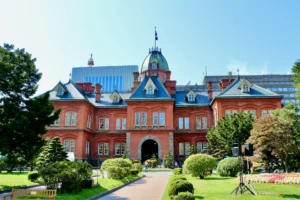
Hokkaido held an expert panel in May 2026 focused on the economic impact of an integrated resort (IR) and measures to address problem gambling. Based on the panel’s discussions, the prefectural government plans to revise its foundational IR policy document, known as the ‘Basic Concept.’ Governor Naomichi Suzuki has indicated he will report a draft outline to the prefectural assembly in mid-June, with a formal revised proposal to be submitted at the September session. The panel debated a broad range of topics, including the regional economic spillover effects and job creation potential of attracting an IR, alongside social concerns such as gambling addiction countermeasures. Hokkaido previously stepped back from its IR bid in 2019. As Osaka advances as Japan’s sole certified IR jurisdiction toward a targeted 2030 opening, the policy revision process now set in motion by this expert panel represents a critical milestone in Hokkaido’s decision on whether to formally pursue an IR.
Business Impact Analysis
Hokkaido’s move to revise its IR policy framework and convene an expert advisory panel carries potential ripple effects across multiple sectors.
In construction and infrastructure, a strategic shift toward actively pursuing an IR would generate demand for large-scale facility development. Sites such as the Niseko area and Tomakomai have previously been cited as candidate locations, presenting new contract opportunities for major general contractors and regional construction firms alike. Companies with proven expertise in cold-climate and snow-country construction stand to gain a meaningful competitive advantage.
In tourism and hospitality, the synergies between Hokkaido’s existing assets — ski resorts, culinary culture, and natural landscapes — and an IR could help resolve the longstanding challenge of achieving year-round tourism. A scenario in which inbound demand accelerates significantly is entirely plausible.
In IT and technology, demand is expected to grow for solutions including visitor management systems for addiction prevention, integration with the My Number Card (Japan’s national ID system), and AI-driven behavioral analytics.
In investment and finance, Hokkaido’s potential emergence as the second domestic IR candidate after Osaka could attract renewed attention from international operators and institutional investors.
On the human resources front, the already-tight supply of IR-specialist professionals could tighten further, making early investment in workforce development increasingly urgent.
It should be noted, however, that the current stage remains one of policy revision proposals and advisory discussions — not a formal commitment to pursue an IR. Any early-stage investment carries commensurate risk.
Editorial Review
From a market-structure perspective, Japan’s current IR policy landscape is effectively concentrated in a single jurisdiction, with Osaka holding the country’s only IR certification. Should Hokkaido formalize its pursuit, competitive dynamics would be introduced into the domestic market, potentially raising the bar for operator selection and service quality. Hokkaido’s globally recognized tourism assets — including Niseko and Furano — give it strong differentiation potential as a resort-type IR destination.
Several risk factors warrant attention. First, the trajectory of the Osaka IR will directly influence Hokkaido’s calculus: a smooth rollout in Osaka would provide a tailwind, while emerging problems could reinforce cautious sentiment. Second, Hokkaido faces unique structural challenges, including the high infrastructure costs associated with its cold, snowy climate and the pronounced seasonality of its tourism demand. Third, public sentiment stemming from the prefecture’s 2019 withdrawal from its earlier bid remains a factor that cannot be ignored. The prominence given to gambling addiction countermeasures on the expert panel’s agenda signals a deliberate effort to confront these social concerns head-on — a stance that deserves recognition.
From a policy standpoint, Japan’s national IR framework permits certification of up to three jurisdictions. Movement by a second serious candidate would carry implications for government policy as a whole. Should Hokkaido formally enter the race, it could also energize other aspirant jurisdictions such as Nagasaki, with potential ripple effects across the entire domestic IR landscape.
For business professionals, committing to concrete investment decisions at this stage would be premature. That said, closely monitoring the September prefectural assembly debate to gauge the direction of the revised policy will be important. In particular, tracking real estate trends in the Tomakomai area, assessing alignment with Hokkaido’s inbound tourism strategy, and analyzing points of differentiation from the Osaka IR will help organizations position themselves for potential future entry. For companies that have already built a track record through the Osaka IR process, this represents a timely opportunity to leverage that accumulated expertise in a new market.
Sources
This article was produced with the assistance of AI and checked for accuracy by a human editor before publication. Please always verify against the original sources before making any business or investment decision.