
News Summary
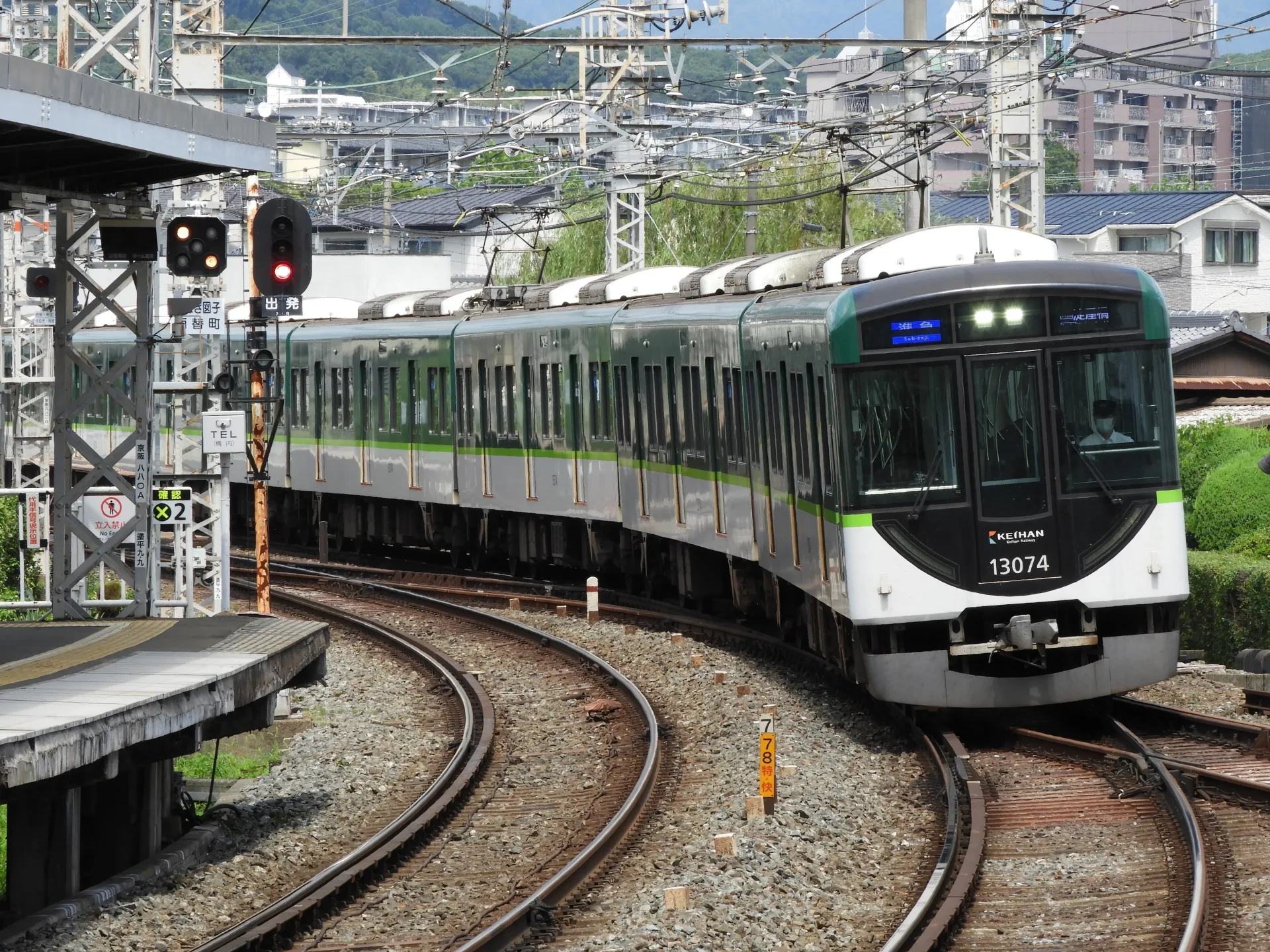
Keihan plans to extend the Nakanoshima Line to Yumeshima via Osaka Metro’s Kujo Station, but the timing gap with the IR opening poses a significant challenge.
Keihan Holdings President Yoshihiro Hirakawa stated on May 12, 2026, that the planned extension of the Nakanoshima Line to Kujo Station on the Osaka Metro Chuo Line — which would provide rail access to Yumeshima — is ‘unlikely to begin construction before 2030 at the earliest.’ With a projected construction period of approximately four years, even a 2030 groundbreaking would place the line’s opening around 2034. This once again highlights the risk that the new rail link will not be operational in time for the launch of the integrated resort (IR), including its casino component, which is scheduled to open in autumn 2030. Keihan has begun formal consultations with Osaka Prefecture and the City of Osaka, and has indicated it will assess the project’s commercial viability over fiscal years 2026–27 by examining factors such as catchment-area population and inbound tourism demand. At present, access to Yumeshima is limited solely to the Osaka Metro Chuo Line (Cosmosquare–Yumeshima), making the provision of adequate transport capacity to meet post-IR-opening demand a matter of urgent priority.
Business Impact Analysis
This announcement serves as a significant confirmation of the transport infrastructure delivery timeline surrounding the Osaka IR opening, with implications spanning multiple sectors.
In construction and infrastructure, preparatory work — including route surveys, environmental impact assessments, and design contracts — is expected to accelerate from fiscal years 2026–27 in anticipation of a groundbreaking around 2030. Large-scale civil engineering works, encompassing tunnelling and underground structures in the vicinity of Kujo Station, are anticipated, generating contract opportunities for general contractors and consulting firms. However, the soft ground conditions on Yumeshima and the complexity of interfacing with existing infrastructure remain material risks for schedule overruns and cost escalation.
In tourism and hospitality, for several years after the IR opens — absent any other new rail services — access to Yumeshima will effectively depend on the Osaka Metro Chuo Line alone. Capacity constraints on inbound visitor flows during the IR’s initial years of operation could limit both the visitor experience and overall facility utilisation rates. This situation may simultaneously present a commercial opportunity for hospitality operators exploring supplementary access solutions such as shuttle bus services and water transport.
In investment and finance, a positive viability assessment would be expected to trigger a significant expansion of Keihan Holdings’ capital expenditure programme, drawing attention to potential uplift in property values along the corridor — particularly in the Nakanoshima, Kujo, and Bentencho areas. The fiscal 2027–28 period, when conclusions from the demand review are expected, will represent a critical decision point for investors considering exposure to the corridor.
In technology and mobility, the gap between the IR opening and the rail extension creates expanded scope for smart mobility solutions — such as MaaS platforms and autonomous shuttle services — to absorb early-stage transport demand. This interim period may open entry points for technology-driven transport operators looking to serve Yumeshima as a ‘bridging’ solution until the Keihan extension is delivered.
Editorial Review
President Hirakawa’s remarks represent a significant formal acknowledgement of the ‘temporal gap’ in transport infrastructure access to the Osaka IR — a structural issue that the market has been watching closely.
From a market-structure perspective, rail access to Yumeshima will remain effectively monopolised by the Osaka Metro Chuo Line through the early 2030s. While the Chuo Line extension from Cosmosquare to Yumeshima was completed in time for the World Expo, whether a single line can absorb the scale of visitor demand expected after the IR opens is a legitimate question. The addition of the Keihan Nakanoshima Line would meaningfully diversify access — and in particular enable direct connectivity from the Kyoto direction — but that benefit is now deferred to the mid-2030s at the earliest.
On the risk side, the two-year demand review process leaves open the scenario in which the project is ultimately shelved. Any revision or scaling-back of IR development plans, or a deterioration in the inbound tourism outlook, could adversely influence the review’s conclusions — making Keihan’s investment decision inseparable from the trajectory of the IR project itself. Technical challenges specific to Yumeshima, including ground settlement risk and interference with existing subsurface infrastructure, also cannot be dismissed as potential drivers of schedule delays and cost overruns.
From a policy standpoint, there is a discernible pattern in which Osaka Prefecture and the City of Osaka are leaving the delivery of IR access infrastructure largely to the commercial judgement of individual railway operators. Whether national or prefectural authorities will deploy financial support or subsidy mechanisms to accelerate construction — and thereby narrow the gap — will be a key variable. The growing case for a layered transport strategy, encompassing multiple parallel access modes — including, for example, access train concepts being explored by the Kintetsu Group — is becoming increasingly difficult to ignore.
For business professionals seeking actionable opportunities, the demand-review phase in fiscal years 2026–27 represents an optimal window for supply-chain positioning. Early involvement in pre-construction activities — design, surveying, and environmental studies — can establish a competitive advantage for the main construction phase. Meanwhile, operators capable of providing ‘bridging transport’ between the IR opening and the rail extension — bus, ferry, and MaaS providers — are looking at a structurally assured, multi-year niche market.
Investors considering medium-to-long-term exposure to corridor real estate in the Kujo and Bentencho areas should monitor the viability conclusions expected in fiscal 2027–28 as a key trigger for their decision-making.
Sources
- https://www.nikkei.com/article/DGXZQOUF12A4I0S6A510C2000000/
- https://www.chunichi.co.jp/article/1250329
This article was produced with the assistance of AI and checked for accuracy by a human editor before publication. Please always verify against the original sources before making any business or investment decision.