
News Summary
On 3–4 August 2026, Money Post WEB published a ranking of the 50 worst-performing train stations in Osaka, measured by the deterioration rate in the number of days required to sell a used condominium (from listing to contract), compared with the prior year.
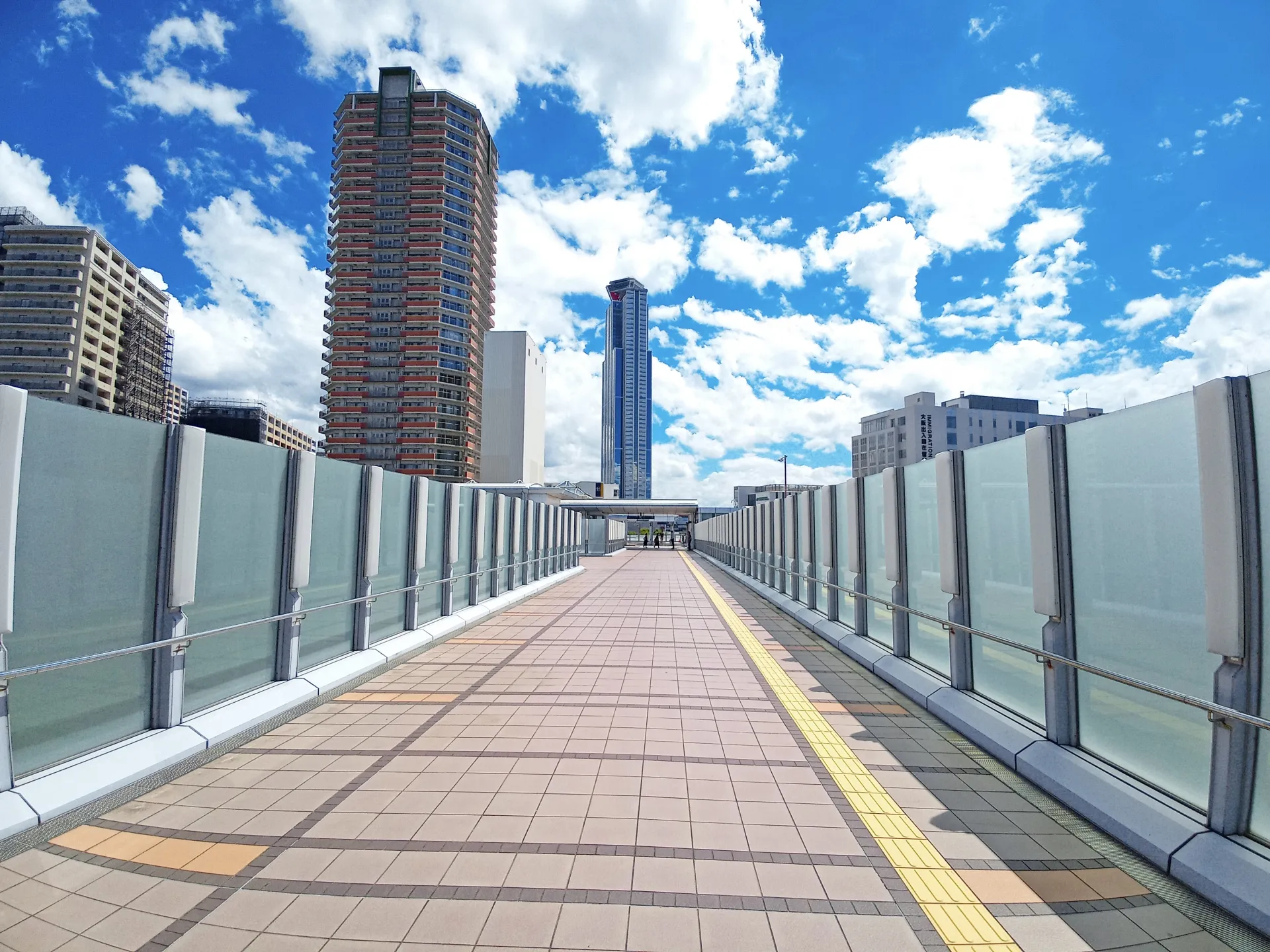
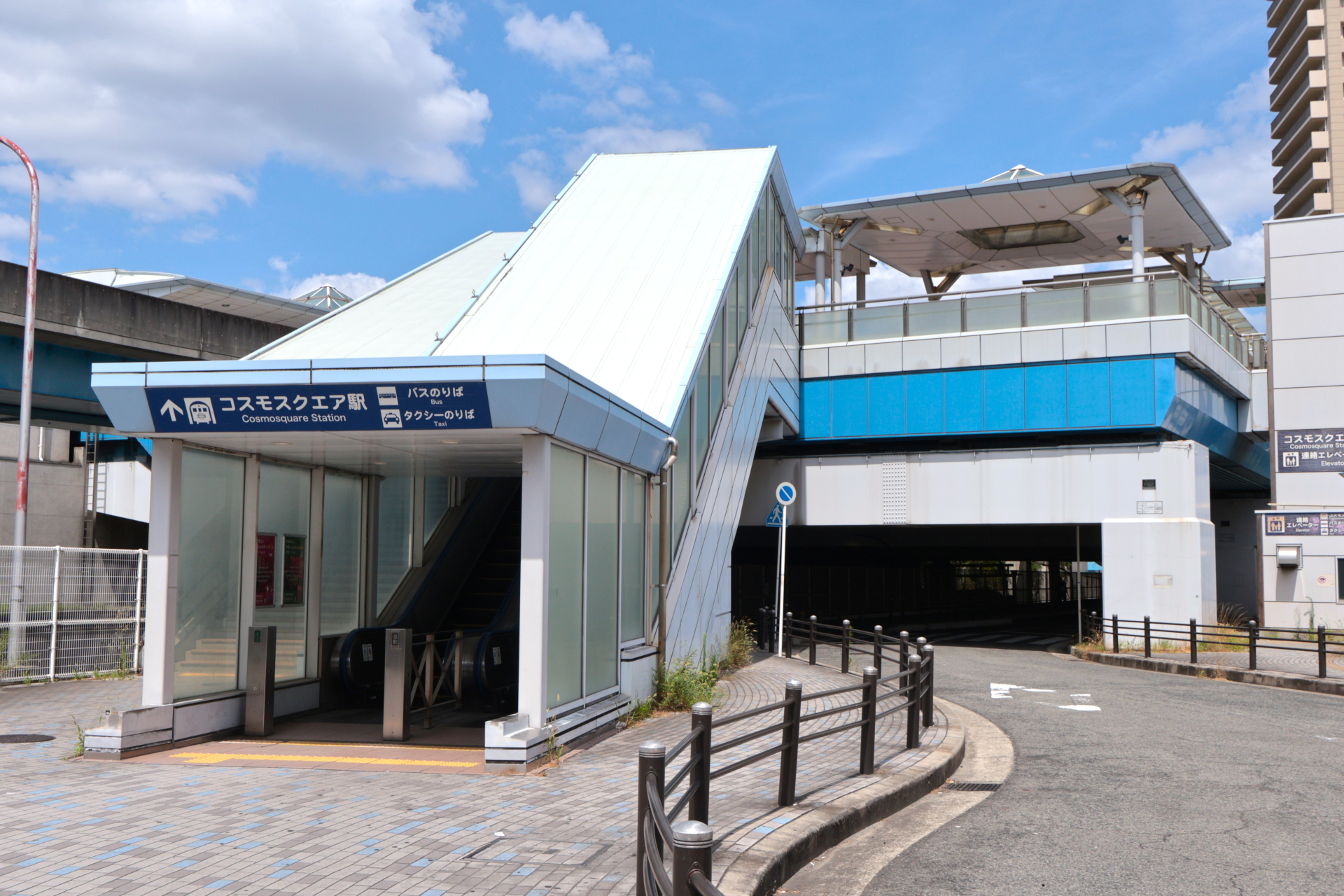
Cosmosquare Station (Suminoe Ward, Sakishima), the station immediately adjacent to the planned Yumeshima IR site, was ranked first.
The article noted that some brokerage and buy-to-resell firms reported a doubling of sell-side inquiries year-on-year, and that in areas where inventory has grown and transactions have stalled, asking prices tend to soften. It also described the area as ‘midway through urban development in anticipation of IR opening,’ and touched on the impact of the close of the World Expo.
An Independent Verification: Examining the Same Area Through Ministry of Land Transaction Data
Days-on-market measures how long it takes to sell a property, but tells us nothing about the actual price or volume of completed transactions.
This publication therefore examined the same area using real estate transaction price data from the Ministry of Land, Infrastructure, Transport and Tourism (MLIT) ‘Real Estate Information Library,’ tracking quarterly transaction results for Suminoe Ward — where Cosmosquare Station is located — and Konohana Ward, which faces Yumeshima across the water.
① The immediate vicinity of Cosmosquare Station sees almost no transactions to begin with
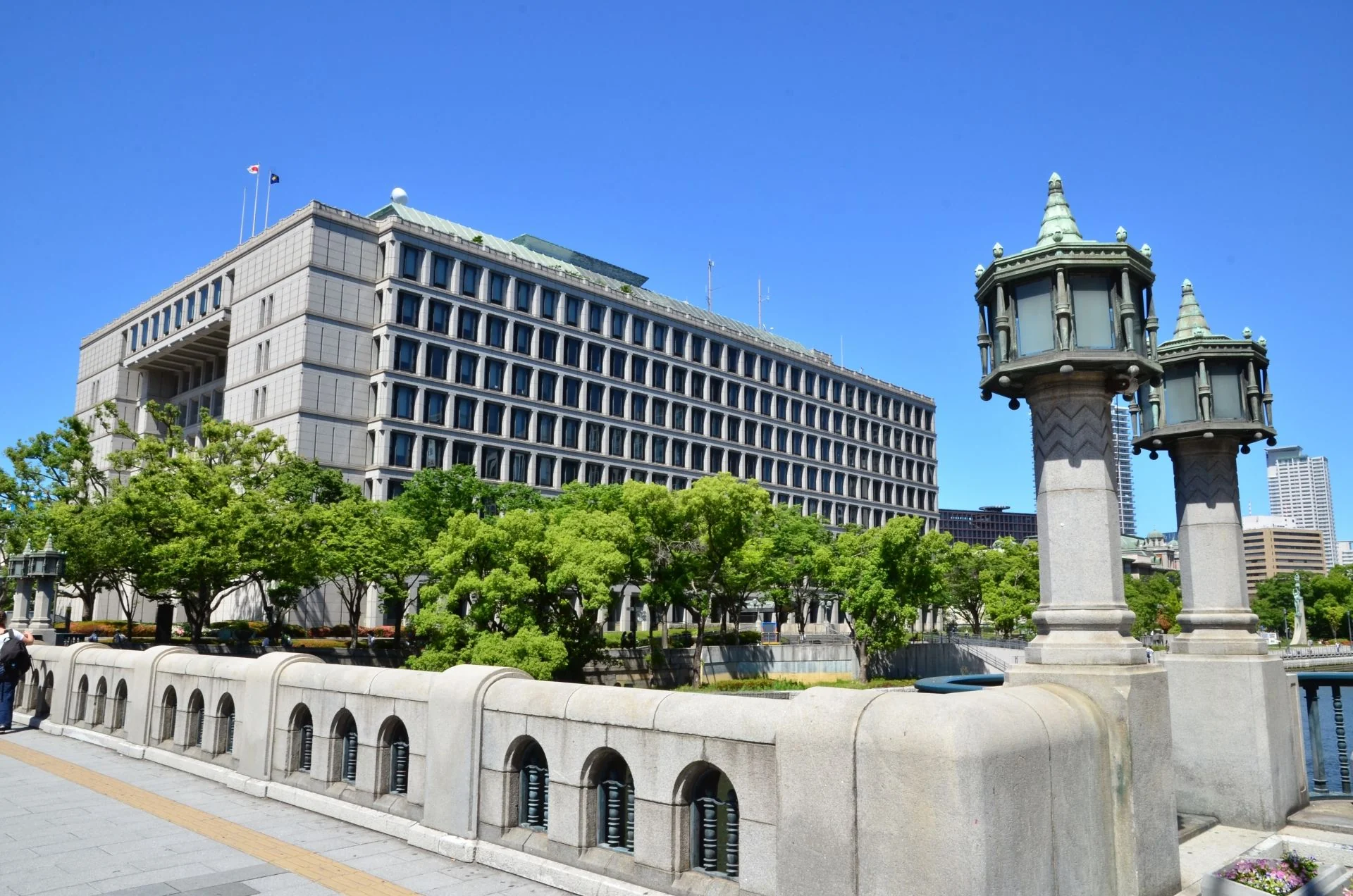
In the Nanko-kita district of Suminoe Ward, where Cosmosquare Station, the Asia Pacific Trade Center (ATC), and the Osaka Prefectural Government Sakishima Building are located, used-condominium transactions recorded 0 closings in Q3 2025, 0 in Q4 2025, and just 3 in Q1 2026.
Expanding the scope to all of Sakishima (Nanko-kita, Nanko-naka, and Nanko-higashi), the figures remain minimal: 2 transactions → 1 → 6.
In other words, this is not a market that has slowed down — it is a market that has only ever transacted at the level of a few deals per quarter.
The days-on-market deterioration rate as a metric is highly sensitive to small sample sizes, and the No. 1 ranking may well be a product of that statistical volatility.
② No price decline is visible in transaction data
The three closings recorded in Nanko-kita in Q1 2026 were: a 70 sq m unit built in 2021 at ¥49 million (¥700,000/sq m); a 65 sq m unit built in 2006 at ¥28 million (¥431,000/sq m); and a 230 sq m open-floor unit built in 2007 at ¥70 million (¥304,000/sq m).
The highest-priced transaction is approximately 1.8 times the ward-wide average unit price for Suminoe Ward in Q1 2026 (¥397,000/sq m).
However, that unit was built in 2021, while the ward average encompasses properties ranging from 1971 to 2025 vintages. The per-square-metre price gap cannot be read straightforwardly as a premium attributable to location.
Although it has been suggested that asking prices tend to fall in areas where inventory accumulates, the transaction data as it stands shows no evidence of distressed selling. That said, three data points are insufficient to confirm that prices are holding firm — the most that can be said is that no fire-sale evidence has been observed.
It is also worth noting that the 230 sq m open-floor unit may have been purchased for commercial rather than residential use, suggesting that Sakishima real estate may be moving more as commercial property than as housing.
③ The ward-level average is being inflated by near-new supply
Used-condominium transactions in Suminoe Ward surged in Q1 2026 — 8 deals → 8 → 23 — while the average unit price rose from ¥263,000/sq m → ¥320,000/sq m → ¥397,000/sq m.
However, 5 of those 23 closings were 2025-built units in Hamaguchi-higashi that transacted simultaneously in the ¥46–50 million range, making them effectively equivalent to new-build sales.
Excluding those 5 units leaves 18 transactions with an average price of ¥22.93 million and a median of ¥19 million — meaning the ward-level ‘rise’ cannot be described as reflective of the broader existing-stock market.
Equally important is the fact that only 6 of the ward’s 23 closings were in Sakishima; the remaining 17 were in inland sub-districts such as Kagaya, Kohama, and Shin-kitajima.
At the ward level, Suminoe Ward appears to be a busy market — but Sakishima is not the engine driving that activity.
Using ward-level statistics to assess the waterfront area risks drawing the wrong conclusions.
This publication’s May 2026 report, Konohana Ward and Suminoe Ward Real Estate Transaction Trends (Q4 2025), previously flagged a quarter-on-quarter swing of –58.1% in the average transaction price for Suminoe Ward and cautioned against over-interpreting small samples. That same volatility remains evident in the latest data.
④ Both wards border the IR site, but Konohana and Suminoe are moving in opposite directions
Used-condominium transactions in Konohana Ward declined — 11 deals → 9 → 7 — while the average unit price held broadly steady at ¥482,000/sq m → ¥507,000/sq m → ¥494,000/sq m.
Looking at total transactions across all property types, Konohana Ward contracted from 21 → 20 → 14, whereas Suminoe Ward expanded from 13 → 20 → 46 — the two wards are moving in opposite directions.
Grouping the waterfront area together simply on the basis of proximity to the IR site is inconsistent with what the data actually shows.
MLIT transaction price data is based on a survey of transaction parties and does not constitute a complete census; floor areas and building ages are published as rounded figures. Given the small number of transactions, no statistically definitive conclusions can be drawn; the figures above should be treated as directional indicators. Furthermore, the ‘days on market’ metric used by Money Post WEB is not contained in the MLIT dataset. This analysis does not refute that publication’s findings; it supplements them from a different angle.
Business Impact Analysis
What this verification reveals is that the primary risk to monitor around Cosmosquare is not price decline but liquidity.
For real estate and investment professionals, a market that completes only a handful of transactions per quarter means that exit timing is essentially unpredictable regardless of how carefully an acquisition price is underwritten.
For buy-to-resell operators, holding period assumptions will determine profit and loss far more than purchase price. Applying the same expected resale timeline as a standard residential area would put serious pressure on cash flow.
For lenders assessing collateral, the scarcity of comparable transactions becomes a question of realisability rather than simply appraised value.
In the construction and infrastructure sector, investment on the Yumeshima side continues to advance — as evidenced by the pedestrian deck master plan and the Phase 2 zone operator solicitation — but residential demand on the opposite shore in Sakishima is not moving in tandem.
The assumption that IR development progress automatically feeds through to surrounding residential demand is not supported by current transaction data.
For the tourism and retail sector, filling the visitor demand gap in Sakishima during the interval between the close of the World Expo and the IR opening (scheduled for autumn 2030) is a key variable that will determine underlying real estate demand in the area.
For IT and data analytics professionals, there is a visible and growing need to cross-reference supply-side metrics such as days on market against demand-side metrics such as actual transaction records. This points to a business opportunity in area assessment services that integrate multiple data sources.
Editorial Review
In terms of market structure, it is more accurate to characterise the Cosmosquare vicinity not as ‘an area that has turned downward from elevated prices,’ but as ‘an area where transaction volume has always been thin.’
Sakishima is built around commercial, logistics, and exhibition functions; residential stock is limited, and the structural conditions for active trading simply do not exist.
When IR-driven optimism generates a wave of new listings on top of that thin base, days on market will naturally extend. The No. 1 ranking is most plausibly read as the combined product of fading speculative expectations and an inherently illiquid market.
On the risk side, the real problem is the prospect of properties remaining unsold without any price correction.
Assets whose embedded gains cannot be realised function poorly as collateral and complicate investment recovery planning. A market where prices must fall before deals can be struck is actually easier to exit than one where prices hold but no buyers appear.
Furthermore, if episodes such as the localised flooding on Yumeshima — as reported by this publication — continue to make risks specific to reclaimed coastal land more visible, buyers’ required yields will rise and liquidity could thin further.
From a policy standpoint, as development of the Yumeshima Phase 2 zone takes shape, a clear statement of intent — whether Sakishima is to be repositioned as a residential district or consolidated as a commercial and industrial zone — would be a prerequisite for stabilising market sentiment.
On the transport side, the extension of the JR Sakurajima Line to Yumeshima is targeted for the latter half of the 2030s, meaning any meaningful improvement in everyday convenience remains distant.
For business professionals exploring opportunities in this area, the more useful lens may be to assess viability based on rental income from commercial uses — office, hospitality, storage — rather than residential capital appreciation.
The presence of a 230 sq m open-floor unit among the Q1 2026 closings is consistent with the possibility that non-residential demand is what is sustaining prices.
For those considering acquisitions, the practical approach would be to assume a longer expected resale period than in standard residential markets and to limit exposure to price points where the carry cost can be sustained through cash flow generated during the holding period.
Sources
This article was produced with the assistance of AI and checked for accuracy by a human editor before publication. Please always verify against the original sources before making any business or investment decision.